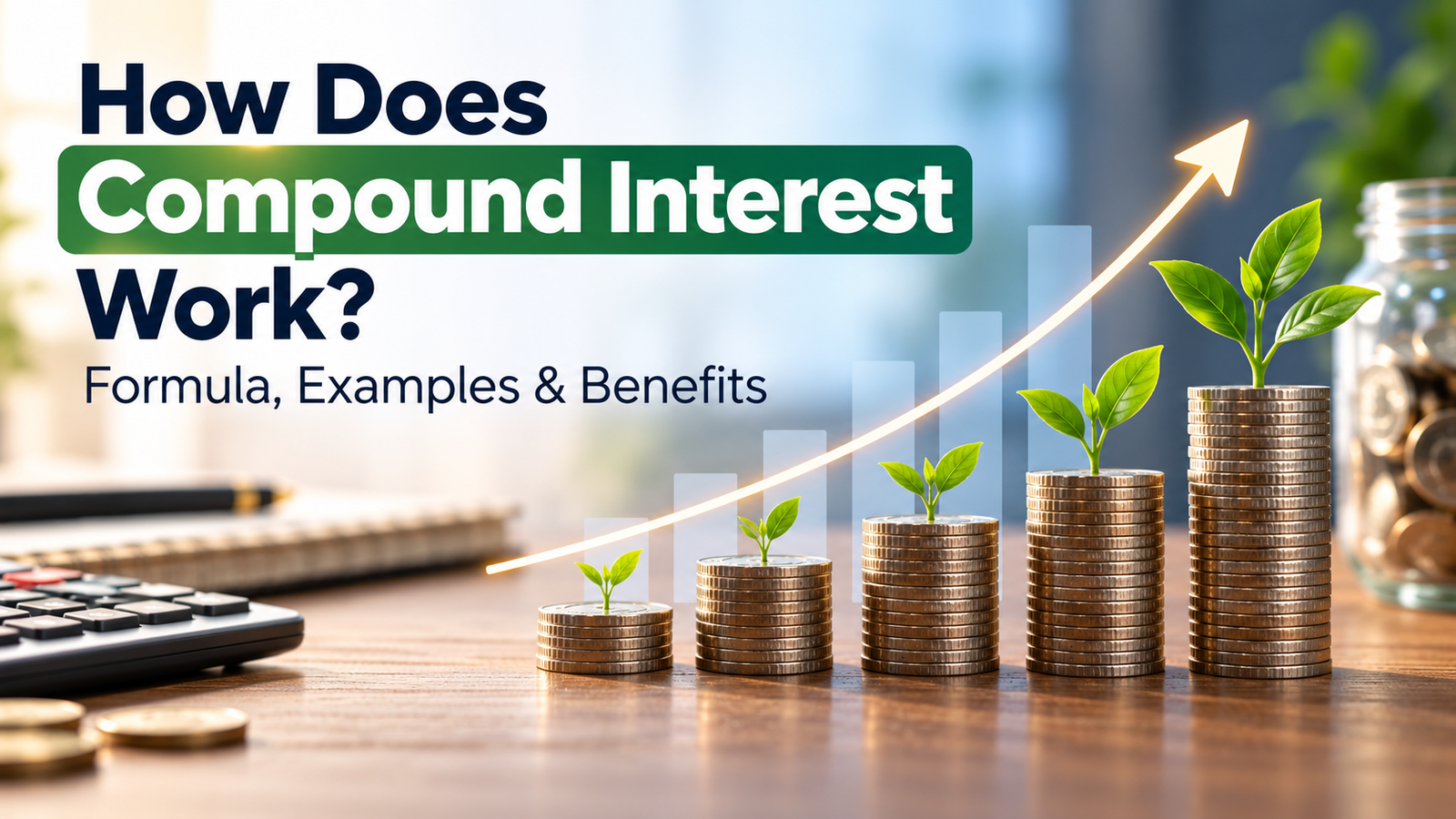
Compound interest is one of the most important concepts in personal finance, saving, and investing. It allows money to grow over time because interest is earned not only on the original amount but also on the interest accumulated in previous periods.
Understanding compound interest can help you make better financial decisions, compare savings options, and estimate how your money may grow over the years.
In this guide, we will explain how compound interest works, explore its formula, and walk through practical examples.
What Is Compound Interest?
Compound interest is interest calculated on both the original principal amount and the interest already added to it.
Unlike simple interest, where interest is calculated only on the original amount, compound interest allows accumulated interest to generate additional interest.
This process is often called compounding.
For example, if you deposit 1,000 currency units into an account that earns 5% annual interest, you earn 50 in interest during the first year.
In the second year, interest is calculated on 1,050 instead of the original 1,000. This means you earn 52.50 in the second year.
Over time, this effect can make your savings grow faster.
Compound Interest Formula
The standard compound interest formula is:
A = P × (1 + r/n)^(n × t)
Where:
- A = Final amount, including interest
- P = Original principal amount
- r = Annual interest rate expressed as a decimal
- n = Number of compounding periods per year
- t = Time in years
To calculate the compound interest earned, use:
Compound Interest = A − P
For example, an annual interest rate of 5% should be written as 0.05 in the formula.
How to Calculate Compound Interest: Example
. Let's understand the calculation with a practical example.
Try the Compound Interest Calculator on Nextivise to estimate how your savings or investment can grow over time
Suppose you invest 1,000 currency units under the following conditions:
- Initial investment: 1,000
- Annual interest rate: 5%
- Compounding frequency: Annually
- Investment period: 10 years
Using the compound interest formula:
A = 1,000 × (1 + 0.05/1)^(1 × 10)
A = 1,000 × (1.05)^10
A = 1,628.89
Therefore:
- Initial investment: 1,000
- Final amount: 1,628.89
- Total interest earned: 628.89
After 10 years, your original investment grows to approximately 1,628.89.
These figures are illustrative and assume a fixed interest rate with no additional deposits, withdrawals, or fees.
Simple Interest vs. Compound Interest
Simple interest and compound interest differ in how interest is calculated.
| Feature | Simple Interest | Compound Interest |
|---|---|---|
| Interest calculation | Original principal only | Principal plus accumulated interest |
| Growth pattern | Linear | Compounding growth |
| Interest earned over time | Generally lower | Can be higher |
| Common use | Certain loans and financial agreements | Savings and investment accounts |
For example, if you invest 1,000 at 5% annually for 10 years:
- Simple interest produces 500 in interest.
- Annual compound interest produces approximately 628.89 in interest.
The difference becomes more noticeable over longer periods.
How Compounding Frequency Affects Growth
Compounding frequency refers to how often interest is added to the principal amount.
Common compounding frequencies include:
- Annually: Interest is added once per year.
- Semi-annually: Interest is added twice per year.
- Quarterly: Interest is added four times per year.
- Monthly: Interest is added twelve times per year.
- Daily: Interest is calculated and added daily, depending on the account's terms.
Generally, when the nominal annual interest rate and investment period remain the same, more frequent compounding results in a higher final amount.
However, the actual terms depend on the financial product.
Why Time Matters in Compound Interest
Time is one of the most powerful factors in compound growth.
When interest remains invested, it can generate additional interest in future periods. The longer this process continues, the greater the potential effect of compounding.
Consider these important principles:
- Starting early gives your money more time to grow.
- Consistent saving can increase your accumulated balance.
- Higher interest rates generally produce greater growth.
- More frequent compounding can increase returns when other factors are equal.
This is why long-term saving and investing strategies often emphasize the importance of time.
Benefits of Compound Interest
Compound interest offers several potential benefits:
1. Growth Over Time
Your accumulated interest can generate additional interest, helping your balance grow over time.
2. Encourages Long-Term Saving
Understanding compounding can encourage people to save and invest consistently.
3. Rewards Early Investing
Starting earlier provides more time for accumulated interest to contribute to future growth.
4. Helps Compare Financial Products
The compound interest formula can help you compare different interest rates, time periods, and compounding frequencies.
What Factors Affect Compound Interest?
Several factors determine how much compound interest you can earn:
- Principal Amount: A larger initial amount generally produces more interest.
- Interest Rate: Higher rates generally increase the final balance.
- Time Period: Longer investment periods allow more compounding cycles.
- Compounding Frequency: More frequent compounding generally increases returns when other conditions are equal.
- Additional Contributions: Regular deposits can increase the total amount available to earn interest.
Remember that actual investment returns may vary, and fees, taxes, inflation, and changing rates can affect the final value.
Frequently Asked Questions
Is compound interest better than simple interest?
Compound interest can generate more interest over time because interest is earned on both the original principal and previously accumulated interest. The result depends on the rate, duration, and financial terms.
How often can interest be compounded?
Interest may be compounded annually, semi-annually, quarterly, monthly, or daily, depending on the financial product.
Does compound interest work for savings accounts?
Yes. Some savings accounts calculate interest using compounding. The rate and compounding method depend on the bank and account terms.
Can compound interest work against you?
Yes. When interest on a debt is compounded, unpaid interest may contribute to the amount on which future interest is calculated. This can increase the cost of borrowing.
How can I calculate compound interest easily?
You can use the compound interest formula or an online calculator. Enter the principal, annual interest rate, investment duration, and compounding frequency to estimate the final amount.
Final Thoughts
Compound interest is a fundamental financial concept that can influence how savings, investments, and certain debts grow over time.
By understanding the formula and the factors that affect compounding, you can make more informed financial decisions and better evaluate long-term financial opportunities.
The key lesson is simple: time, consistency, and the rate of return can make a significant difference to long-term financial growth.