A personal loan can help you manage unexpected expenses, consolidate debt, pay medical bills, or finance important purchases. However, before borrowing money, it is important to understand how much you will need to repay every month.
Calculating your personal loan payments helps you estimate your monthly installment, understand the total interest cost, and choose a repayment term that fits your budget.
In this guide, you will learn how to calculate personal loan payments using a simple formula, follow a practical example, understand how interest affects your monthly installments, and discover ways to reduce your borrowing costs.
What Is a Personal Loan?
A personal loan is money borrowed from a bank, credit union, or financial institution that you repay over an agreed period through regular installments.
Most personal loans have a fixed interest rate and a fixed repayment term. This means your monthly payment generally remains the same throughout the loan period.
Personal loans are commonly used for:
- Emergency expenses
- Medical bills
- Home improvements
- Debt consolidation
- Education expenses
- Major personal purchases
What Is a Monthly Personal Loan Payment?
A monthly personal loan payment is the amount you pay to the lender every month until the loan is fully repaid.
Your monthly installment generally includes two components:
- Principal: The portion of your payment that reduces the original amount borrowed.
- Interest: The cost charged by the lender for borrowing money.
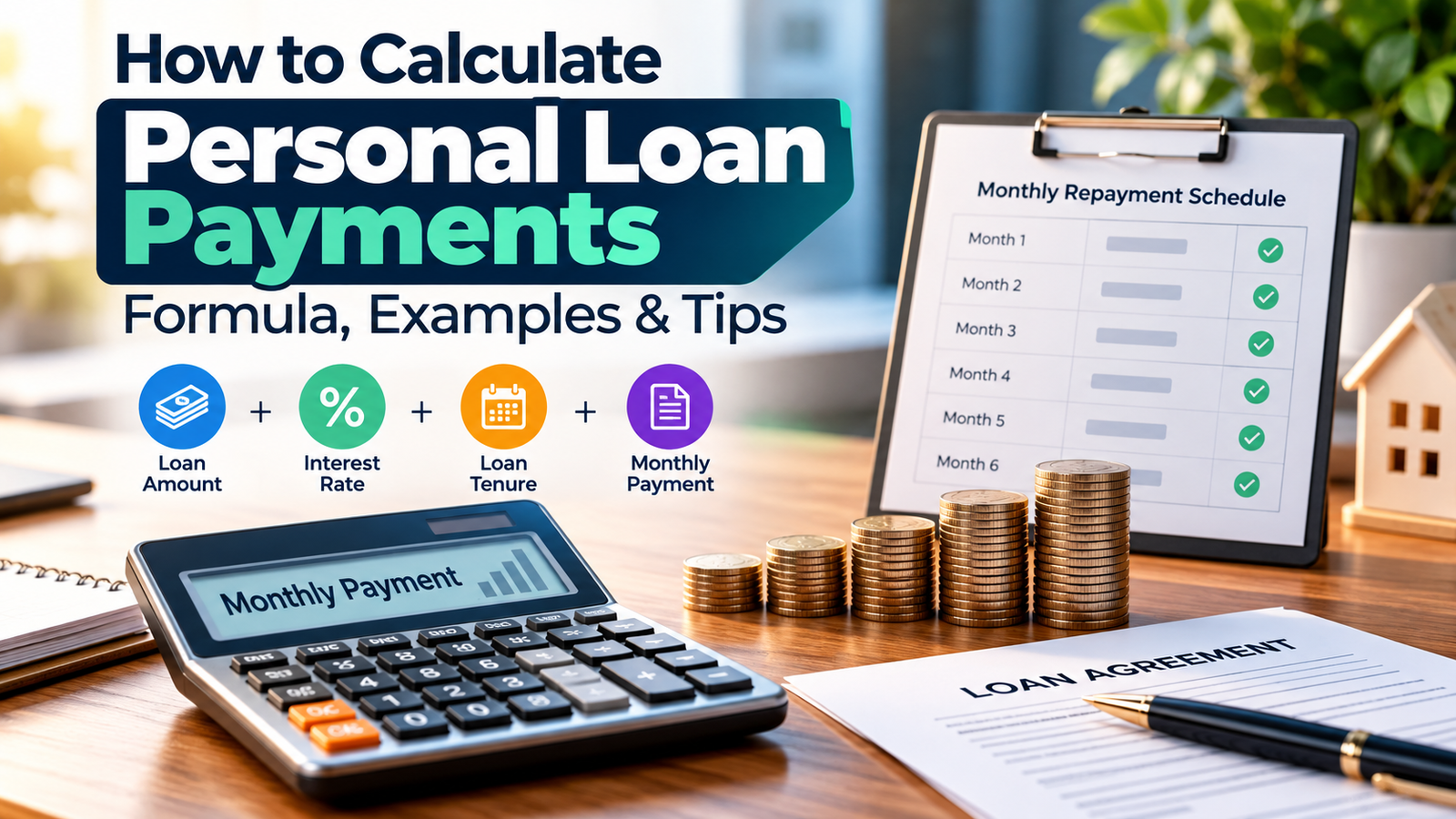
Your monthly payment mainly depends on three factors: the loan amount, annual interest rate, and repayment term.
Personal Loan Payment Formula
Most fixed-rate personal loans use the Equated Monthly Installment (EMI) formula to calculate monthly payments.
The formula is:
EMI = P × r × (1 + r)^n / [(1 + r)^n − 1]
Where:
- P: Principal loan amount
- r: Monthly interest rate (annual interest rate ÷ 12 ÷ 100)
- n: Total number of monthly payments
This formula calculates a fixed monthly payment that includes both principal and interest.
Step-by-Step Example: Calculate a Personal Loan Payment
Let's calculate the monthly payment for a personal loan using the following example.
| Loan Detail | Value |
|---|---|
| Loan Amount | $10,000 |
| Annual Interest Rate | 12% |
| Loan Term | 3 Years |
| Monthly Interest Rate | 1% |
| Total Payments | 36 Months |
Step 1: Calculate the Monthly Interest Rate
Divide the annual interest rate by 12 months and then by 100.
12 ÷ 12 ÷ 100 = 0.01
The monthly interest rate is 1%, or 0.01 in decimal form.
Step 2: Calculate the Number of Payments
Multiply the loan term in years by 12.
3 × 12 = 36 monthly payments.
Step 3: Apply the EMI Formula
Using the EMI formula:
EMI = 10,000 × 0.01 × (1.01)^36 ÷ [(1.01)^36 − 1]
Estimated Monthly Payment = $332.14
Step 4: Understand the Result
You will pay approximately $332.14 every month for 36 months.
The exact payment is approximately $332.143, before rounding. Your lender's actual payment may differ slightly because of rounding, fees, or loan-specific terms.
Estimated Loan Repayment Summary
Here is the estimated repayment breakdown for this example.
| Description | Amount |
|---|---|
| Original Loan Amount | $10,000.00 |
| Monthly Payment | Approximately $332.14 |
| Repayment Period | 36 Months |
| Total Repayment | Approximately $11,957.15 |
| Total Interest | Approximately $1,957.15 |
The total repayment includes the original loan amount and the interest charged over the repayment period. These figures exclude additional lender fees.
How Is Each Monthly Payment Divided?
Your monthly payment is not entirely applied to the loan balance. Part of it pays interest, while the remaining amount reduces the principal.
At the beginning of the loan, a larger portion of each payment generally goes toward interest. As the outstanding balance decreases, the interest portion also decreases.
First-Month Payment Breakdown
For our example:
- Original loan balance: $10,000
- Monthly interest rate: 1%
- Monthly payment: approximately $332.143
First month's interest:
$10,000 × 1% = $100
Principal paid:
$332.143 − $100 = $232.143
Remaining loan balance:
$10,000 − $232.143 = $9,767.857
| First-Month Breakdown | Amount |
|---|---|
| Monthly Payment | $332.14 |
| Interest Paid | $100.00 |
| Principal Paid | Approximately $232.14 |
| Remaining Loan Balance | Approximately $9,767.86 |
This demonstrates how each monthly payment gradually reduces your outstanding loan balance.
Factors That Affect Personal Loan Payments
Several factors determine how much you pay every month.
1. Loan Amount
A higher loan amount generally results in a higher monthly payment because you are borrowing more money.
2. Interest Rate
The interest rate directly affects your borrowing cost. A higher interest rate usually means a higher monthly payment and more total interest.
3. Loan Term
The loan term is the time you have to repay the loan.
A longer repayment term generally reduces your monthly installment but increases the total interest paid over time.
4. Additional Fees
Some lenders charge origination fees, processing fees, or other costs. These fees may increase the overall cost of borrowing.
Always review the loan agreement to understand the full repayment amount.
Shorter vs. Longer Loan Terms
Choosing the right repayment period is important because it affects both your monthly payment and total interest cost.
| Loan Term | Monthly Payment | Total Interest |
|---|---|---|
| Shorter Term | Higher | Usually Lower |
| Longer Term | Lower | Usually Higher |
A shorter term can help you save on interest, while a longer term may make monthly payments more affordable.
Choose a repayment period that fits your monthly budget without creating unnecessary financial pressure.
How to Reduce Personal Loan Costs
You can take several steps to reduce the overall cost of a personal loan:
- Compare interest rates: Review offers from multiple lenders before choosing a loan.
- Borrow only what you need: Avoid taking a larger loan than necessary.
- Consider a shorter term: If your budget allows, a shorter repayment period may reduce total interest.
- Check additional fees: Look for processing fees, origination charges, and early repayment penalties.
- Make extra payments when possible: Check whether your lender allows additional principal payments without penalties.
Calculate Your Payment with a Personal Loan Calculator
Calculating monthly installments manually can be time-consuming. A personal loan calculator makes the process easier.
Use our Personal Loan Calculator to estimate your monthly payment by entering:
- Loan amount
- Annual interest rate
- Loan term
The calculator helps you understand your estimated monthly installment and plan your repayment before applying for a loan.
Remember that calculator results are estimates. Your lender may include additional fees, different interest calculations, or other loan-specific conditions.
Frequently Asked Questions
1. How do I calculate my personal loan payment?
You can calculate your personal loan payment using the EMI formula. Enter the loan amount, monthly interest rate, and total number of payments to estimate your monthly installment.
2. What happens if I choose a longer loan term?
A longer loan term generally reduces your monthly payment. However, you may pay more interest over the entire repayment period.
3. Does a higher interest rate increase monthly payments?
Yes. A higher interest rate generally increases both your monthly installment and the total cost of the loan.
4. Are personal loan payments fixed?
Many personal loans have fixed interest rates and fixed monthly payments. However, variable-rate loans may have payments that change over time.
5. Do personal loans include processing fees?
Some lenders charge processing or origination fees. These charges may be deducted from the loan amount or added to the borrowing cost. Always check the lender's terms before accepting a loan.
6. Can I pay off my personal loan early?
Many lenders allow early repayment, but some may charge prepayment penalties. Review your loan agreement before making additional payments.
7. How much personal loan can I afford?
The amount you can afford depends on your income, existing debts, monthly expenses, interest rate, and repayment period. Choose a payment that fits comfortably within your budget.
Final Thoughts
Understanding how to calculate personal loan payments can help you make better borrowing decisions.
By knowing your monthly installment, interest cost, and total repayment amount, you can compare loan offers and choose a repayment plan that suits your financial situation.
Before taking out a personal loan, compare lenders, review additional fees, and make sure the monthly payment comfortably fits your budget.
Use our Personal Loan Calculator to estimate your monthly installments and plan your loan repayment with greater confidence.